California Earthquake Safety Guide: What Every Homeowner Should Know
September 24, 2026
Neighborhood Guides

September 24, 2026
Neighborhood Guides
Living in California means earthquakes are part of the environment we plan around, even when they aren't something we think about every day. For homeowners in Pleasanton, Livermore, Dublin, and throughout the Tri-Valley, earthquake preparedness is less about predicting when something will happen and more about knowing what to do before, during, and after shaking begins.
At Park46 Real Estate, we spend a lot of time talking with buyers about homes, neighborhoods, renovations, and the details that make a property work for everyday life. Earthquake preparedness is another practical part of homeownership that deserves attention, particularly when you're buying an older home, remodeling, or simply taking stock of how prepared your household is.
California's official Earthquake Warning California program provides resources for preparing for earthquakes and receiving alerts. Its statewide system uses seismic sensors to detect an earthquake after it begins and can provide some people with crucial seconds of warning before stronger shaking reaches their location.
An earthquake can happen without much notice. The Southern California Earthquake Data Center, for example, maintains a continuously updated list of recent earthquakes recorded across California and Nevada.
That doesn't mean homeowners should live in fear of the next earthquake. It simply means preparation is worthwhile.
Start with the basics inside your home. Secure furniture that could tip, especially bookcases, televisions, cabinets, and other heavy objects. Think about what is stored above beds, sofas, and frequently used areas. During shaking, even everyday household objects can become hazards if they are not properly secured.
It's also worth knowing where your utility shutoffs are and keeping essential supplies somewhere that is easy to reach. A flashlight, batteries, first-aid supplies, drinking water, basic tools, and important contact information can all be useful if power or communications are temporarily disrupted.
The most important response is simple: Drop, Cover, and Hold On.
If you receive an earthquake warning or feel shaking, move away from windows and objects that could fall, get under a sturdy table or desk if one is nearby, and hold on until the shaking stops.
Earthquake Warning California explains that its system is designed to provide warnings before shaking reaches some users, but the amount of warning varies. People closer to the earthquake's origin may receive an alert just before, during, or even after shaking begins.
That's an important distinction: earthquake early warning is not earthquake prediction. The system does not know that an earthquake will happen before it starts. Instead, sensors detect an earthquake that is already underway and rapidly send information through the warning system.
For homeowners, that means an alert should be treated as an opportunity to act—not as a guarantee that you have a certain number of seconds to prepare.
California residents have several ways to receive earthquake warnings.
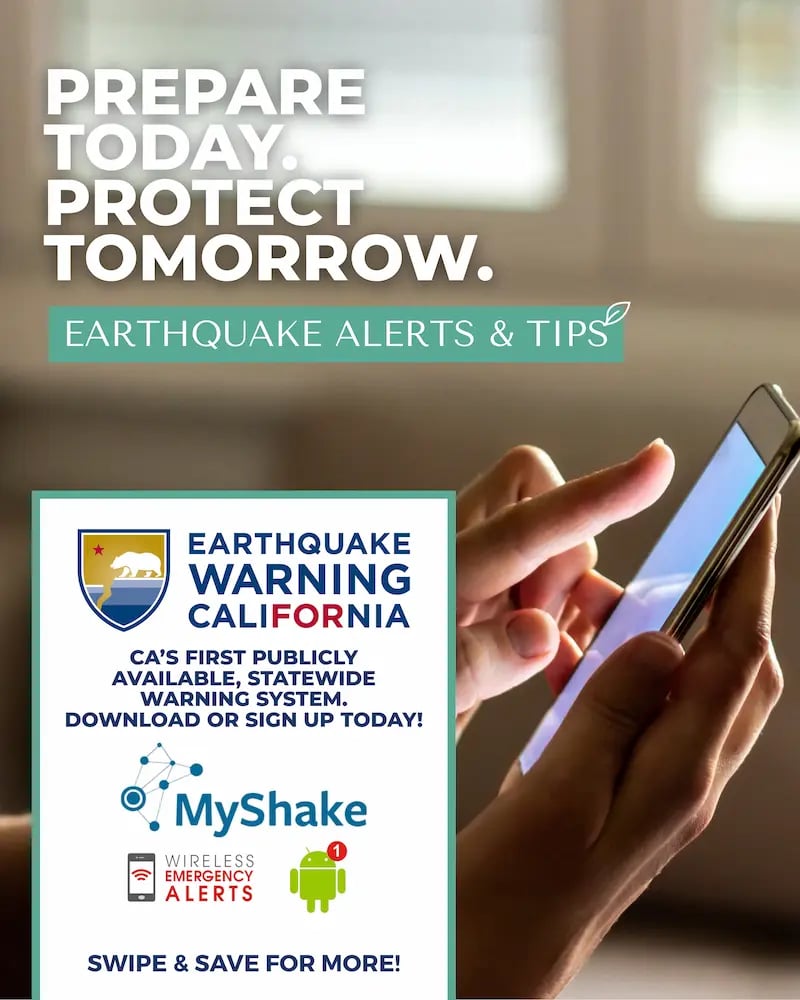
The MyShake App provides audio and visual earthquake warnings on compatible iPhone and Android devices. According to Earthquake Warning California, the app provides warnings for qualifying earthquakes beginning at magnitude 4.5 and Modified Mercalli Intensity III shaking.
Android phones with supported operating systems can also receive Android Earthquake Alerts, which uses the same underlying earthquake warning technology.
Wireless Emergency Alerts (WEAs) provide another no-cost method of receiving emergency information on compatible mobile devices. Earthquake Warning California identifies earthquake-related WEA alerts beginning at magnitude 5.0 and Modified Mercalli Intensity IV shaking.
For homeowners, one of the easiest steps is simply checking that emergency notifications and location services are enabled on your phone.
You can also visit Earthquake Warning California for current information about MyShake, Android alerts, preparedness resources, and how the system works.
Preparedness doesn't have to become a major weekend project. Start by walking through your home room by room.
Look for:
Tall furniture that could tip over
Heavy objects stored on high shelves
Mirrors or artwork hanging above beds or seating
Cabinets that could open during shaking
Large appliances or equipment that may need securing
Items near windows that could become falling or breaking hazards
Locations of water, gas, and electrical shutoffs
If you're purchasing a home, these are also useful things to notice during a showing. You don't need to turn a home tour into a structural inspection, but paying attention to the home's age, construction, visible condition, and any obvious maintenance concerns can help you identify questions to discuss with your inspector or other qualified professionals.
For specific structural concerns, homeowners should rely on appropriately licensed professionals rather than making assumptions from a real estate listing or visual inspection.
It can be an important question to ask.
California has many different types of housing, from newer construction to homes that have been standing for decades. Construction standards and seismic requirements have changed over time, so the age and construction history of a property can be relevant when you're evaluating earthquake preparedness.
If you're considering buying an older home in the Tri-Valley, ask about available records, permits, previous renovations, and any known structural work. A professional home inspection can also help identify conditions that deserve further evaluation.
This is one reason we encourage buyers to look beyond the cosmetic details of a property. A beautifully remodeled kitchen may catch your attention, but the less visible aspects of a home can be just as important when you're making a long-term purchase.
Have a simple household plan.
Decide where family members should go during shaking, how you will communicate if you become separated, and where emergency supplies are stored. If you have children, older family members, pets, or anyone who may need additional assistance, include their needs in your plan.
It's also smart to think beyond the first few minutes. What happens if the power is out? What if cell service is limited? What if you cannot immediately leave your neighborhood?
California's official earthquake resources provide preparedness information for residents, businesses, educators, and other groups.
The California Earthquake Warning website is a good place to start building that plan.
For buyers, earthquake preparedness is another piece of the larger home-buying conversation.

When you're comparing properties, consider the home's age, construction, condition, location, and available records. You can also research hazards and local conditions rather than relying on a property's appearance alone.
The U.S. Geological Survey provides an interactive earthquake map that allows users to explore earthquake activity and locations.
That information can be useful for general awareness, but a map of earthquake activity should not be treated as a property-specific structural assessment or a prediction of future earthquakes.
For buyers exploring different Tri-Valley neighborhoods, this is part of the bigger picture we encourage clients to consider. The right home isn't simply about the floor plan or finishes. It's about understanding the property and the community as a whole, asking good questions, and knowing what deserves a closer look during the due-diligence process.
Earthquake preparedness isn't about knowing exactly when the next earthquake will happen. It is about making a few practical decisions before you need them.
Download an appropriate earthquake alert tool. Check your emergency settings. Secure heavy furniture. Put together basic supplies. Know where your household members should go during shaking. And if you're buying a home, ask questions about the property's history and condition.
For current preparedness information and official California earthquake resources, visit Earthquake Warning California.
At Park46 Real Estate, we believe understanding a home means looking beyond the photos and the list price. Whether you're buying your first home, moving within the Tri-Valley, or preparing a property for sale, practical details like these can help you make more informed decisions about where—and how—you live.
Stay up to date on the latest real estate trends.
Luxury Real Estate
A closer look at the Pleasanton lifestyle, outdoor spaces, and flexible home design at 4212 Cabernet Ct.

Property Updates
A new price brings fresh attention to this newer Irby Ranch home near Downtown Pleasanton.
Market Update
A local look at prices, inventory, and market conditions across the East Bay this September.

Luxury Real Estate
A closer look at the neighborhood lifestyle surrounding 1647 Harvest Rd.
Neighborhood Guides
Simple steps every California homeowner can take now to be better prepared for the next earthquake.

Tri-Valley Real Estate
A milestone built on relationships, local expertise, and a lot of heart.
Luxury Real Estate
A comfortable Livermore home with thoughtful updates, practical features, and a convenient location.

Neighborhood Guides
Pleasanton
Stanley Blvd: Desirable Pleasanton Area | Park46 Real Estate
With local expertise and a global reach, we collaborate with agents worldwide to assist our clients wherever their real estate needs take them.